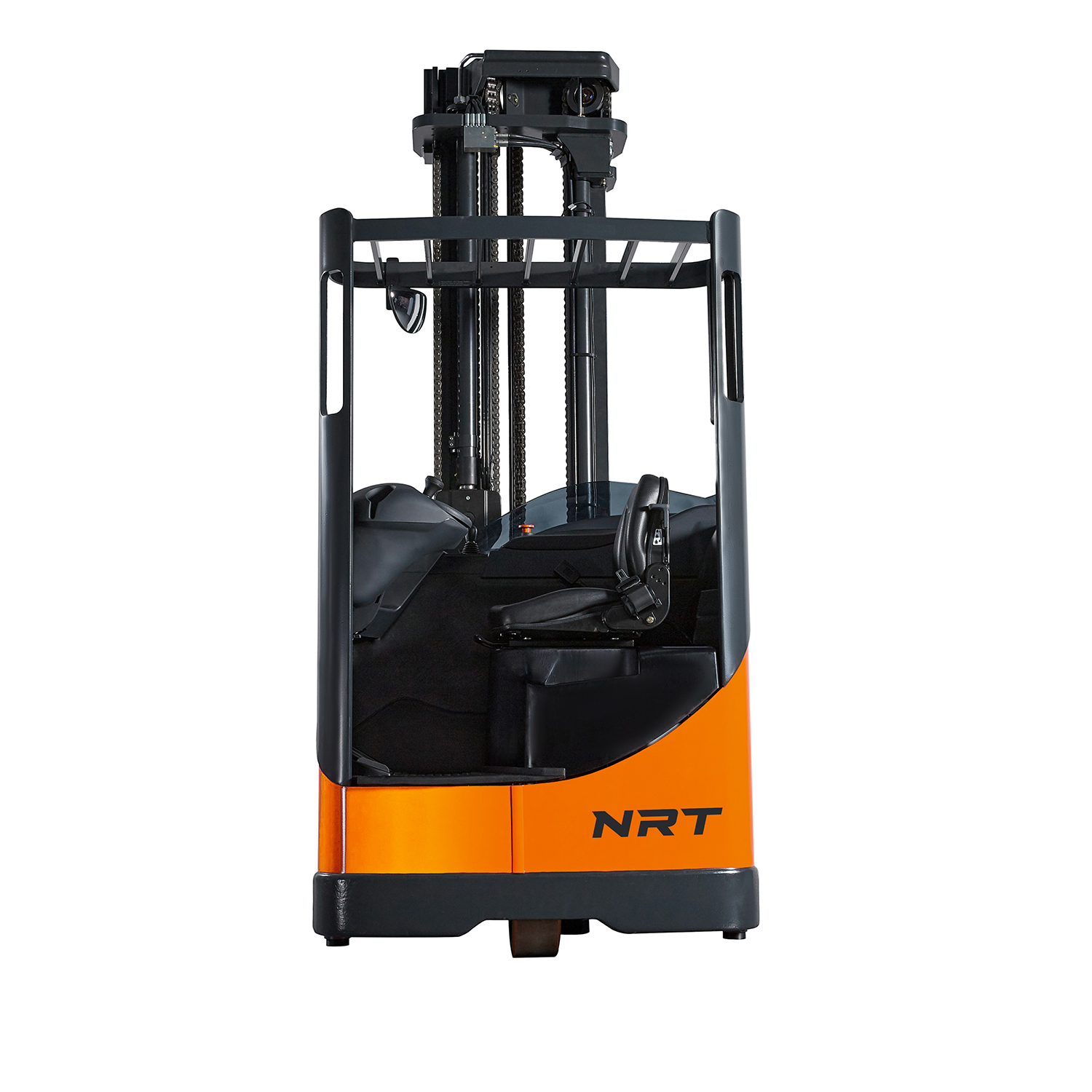
As warehouse footprints become more expensive, operations are forced to build up rather than out. This vertical shift shrinks aisle widths and maximizes vertical racking. Standard counterbalanced forklifts require wide turning lanes. They quickly create a bottleneck for high-density storage environments. Reach Trucks are Class II electric motor narrow aisle vehicles. They are designed specifically to navigate tight spaces. They easily lift heavy loads to extreme heights without requiring a massive rear counterweight.
This article provides warehouse managers and procurement teams with an objective framework. We will help you evaluate, compare, and implement narrow aisle equipment based on your facility infrastructure. You will learn how these specialized machines function and where they outperform standard forklifts. You will also discover the critical specifications to review before upgrading your warehouse fleet.
Reach trucks reduce required aisle widths by up to 25–30% (typically operating in 8.5 to 9.5-foot aisles compared to 12-foot aisles for standard forklifts).
They rely on two outer stabilizing legs and a pantograph (or moving mast) extending mechanism rather than a heavy rear counterweight.
Ideal for indoor, smooth-surface warehouse environments; entirely unsuitable for outdoor, uneven, or loading dock (trailer loading) applications.
Adoption requires specialized OSHA certification (Standard 1910.178) and often demands upgrades to warehouse floor flatness (F-number/Fmin).
Narrow aisle equipment relies on clever engineering to maintain a small footprint. Standard forklifts use a heavy iron block in the rear to counterbalance loads. Narrow aisle trucks use structural base legs and dynamic extension mechanisms. This allows them to lift safely while maneuvering in tight confines.
The fork carriage must extend forward into the racking to place a pallet. Manufacturers achieve this reach using two primary mechanisms. North American markets heavily favor the pantograph design. This scissor-like mechanism extends the forks forward while the mast remains stationary. It allows for rapid extension and retraction.
European markets typically prefer moving mast designs. In this configuration, the entire mast travels forward along rails built into the base legs. Moving mast models often provide superior stability for extremely heavy loads at high elevations. Both designs successfully eliminate the need for wide turning arcs.
Table 1: Pantograph vs. Moving Mast Characteristics
Feature | Pantograph Mechanism (Scissor Reach) | Moving Mast Design |
|---|---|---|
Market Dominance | North America | Europe |
Extension Method | Scissor mechanism pushes forks forward | Entire mast glides forward on base rails |
Clearance Needs | Requires clearance for scissor action | Requires clearance for mast travel |
Maintenance Profile | More moving joints require lubrication | Fewer joints, relies on rail tracks |
Base legs represent the core stabilizing feature of these vehicles. These outrigger legs extend forward directly under the load. They absorb and distribute the payload weight into the floor. Because the load remains securely positioned within the vehicle's wheelbase, you do not need a massive rear counterweight. This simple physics shift shrinks the machine's overall length. It allows the vehicle to rotate within incredibly tight aisles.
Operators do not sit down while driving these vehicles. They stand in a specialized compartment. Most models use a side-stance or a fore-aft stance configuration. This standing position dramatically improves visibility. Operators must constantly change directions in tight warehouse aisles. A side-stance allows them to look forward and backward simply by turning their head. They do not have to twist their entire torso. This ergonomic approach reduces fatigue during long shifts.
Choosing between traditional counterbalanced forklifts and Reach Trucks dictates your entire warehouse layout. Facility managers must evaluate spatial requirements alongside equipment constraints. Understanding these differences ensures you deploy the right tool for the right zone.
Counterbalanced trucks demand massive turning lanes. They typically require 11 to 13 feet of aisle width to place a pallet safely. This wastes valuable real estate. Narrow aisle models solve this spatial crisis. They easily operate in aisles as narrow as 8.5 to 9.5 feet. Reclaiming three feet per aisle across a large facility allows you to install additional racking rows. This massively boosts your total storage capacity.
Standard forklifts usually max out around 180 to 240 inches of lift height. If you need to store pallets higher, they simply fail. Narrow aisle vehicles excel at extreme heights. Many models can lift loads upwards of 300 to 450 inches. This vertical superiority allows facilities to utilize the entire cubic volume of their building. You can stack product directly to the ceiling.
Despite their vertical dominance, these machines have strict limitations. You cannot use them as general-purpose handlers. Consider these critical constraints:
Outdoor Operations: They feature hard polyurethane tires and extremely low undercarriage clearance. They cannot operate on asphalt or gravel.
Trailer Loading: You cannot drive them onto a loading dock or directly into a semi-trailer. The base legs get caught on dock plates.
Uneven Concrete: They require perfectly smooth surfaces. Potholes or steep ramps will trap the equipment.
You will pay a premium upfront for narrow aisle technology. These vehicles utilize complex hydraulic systems and advanced stabilizing mechanisms. However, the initial acquisition cost pales in comparison to the space reclaimed. Real estate is expensive. Building a new warehouse costs millions. Reclaiming 30% of your existing space generates immediate and massive return on investment. You must weigh the higher sticker price against the value of increased storage density.
Comparison Chart: Standard Forklifts vs. Narrow Aisle Models
Metric | Standard Counterbalanced Forklift | Narrow Aisle Equipment |
|---|---|---|
Typical Aisle Width | 11 to 13 feet | 8.5 to 9.5 feet |
Max Lift Height | ~180 to 240 inches | ~300 to 450+ inches |
Operating Environment | Indoors and Outdoors (depending on tires) | Strictly Indoors (smooth concrete only) |
Trailer Loading Capability | Yes, excellent for dock work | No, base legs interfere with dock plates |
You cannot simply drop a new fleet into an old warehouse. High-density equipment must seamlessly integrate with your existing infrastructure. Careful facility analysis prevents disastrous implementation errors.
Your existing racking dictates the specific vehicle configuration you must purchase. Consider these three common setups:
Selective Racking: This standard single-depth setup works perfectly with standard single-reach models. The operator simply extends the forks forward one pallet position.
Double-Deep Racking: This setup stores two pallets back-to-back. You must procure a deep-reach (or double-reach) model. These feature an extended pantograph. However, lifting a pallet at the second depth significantly reduces the safe load capacity.
Drive-In Racking: This high-density setup requires specialized narrow-leg configurations. The base legs must physically straddle the bottom pallets resting on the floor. Standard legs will collide with your ground-level inventory.
Floor flatness represents a critical implementation reality. Standard forklifts tolerate uneven concrete. High-reach operations do not. When you lift a heavy pallet 30 feet into the air, minor floor deviations become dangerous. A quarter-inch dip at the base wheel magnifies into several inches of mast sway at the top. This sway risks load instability and rack collisions. Before upgrading your fleet, you must hire an engineer to test your floor's F-min ratings. You may need to grind or epoxy your floors to meet safety standards.
Facility managers often focus entirely on maximum lift height. They frequently forget about collapsed height. When the mast is fully lowered, it must still fit through your warehouse doors. Measure every overhead obstruction. Factor in sprinkler system clearances, HVAC ductwork, and pedestrian walkways. A machine trapped in one zone because it cannot fit through a doorway destroys operational flow.
Procuring warehouse equipment requires intense attention to engineering specifications. You must match the machine's capabilities to your heaviest loads and longest shifts. A poorly specified vehicle creates safety hazards and limits productivity.
Capacity derating is a vital evaluation metric. A vehicle rated for 4,500 lbs at ground level cannot lift that weight to the ceiling. As the mast extends upward, the load center shifts slightly forward. This reduces the safe lifting capacity. It may only safely lift 2,000 lbs to its maximum height. Procurement teams must calculate requirements based on the highest load placed at the highest rack. Ignoring derating curves leads to catastrophic tipping accidents.
Best Practices for Procurement:
Request exact derating charts from the dealer for your specific racking height.
Weigh your heaviest typical pallet before finalizing the specification.
Never assume a base capacity rating applies to maximum vertical lifts.
Power configurations drastically impact facility design. Historically, fleets relied on heavy lead-acid batteries. These require dedicated battery swapping rooms and extensive maintenance. Today, lithium-ion (Li-ion) integration dominates the market. Li-ion allows operators to opportunity-charge during lunch breaks. Multi-shift facilities benefit massively from Li-ion setups. You can eliminate expensive battery rooms and reclaim that space for revenue-generating storage.
Placing a pallet perfectly at 400 inches strains the human eye. Operator assist features offer significant return on investment. Laser fork guides project a visible red line onto the pallet pocket. Height pre-selectors allow the mast to stop automatically at specific rack levels. Camera systems mounted on the carriage provide a direct video feed to the operator's screen. These optional features mitigate operator fatigue. They drastically reduce costly rack damage at extreme heights.
Introducing narrow aisle equipment alters your entire safety culture. The physical mechanics of operating these machines differ entirely from traditional forklifts. You must prepare your workforce for a challenging transition period.
Do not assume an experienced forklift driver can immediately jump onto a narrow aisle machine. OSHA Standard 1910.178 mandates strict compliance. Re-certifying operators for Class II equipment is legally required. Operating a side-stance, rear-steering vehicle demands completely different motor skills. The steering wheel acts inversely to a car when moving in certain directions. Proper, documented training protects your staff and shields your company from severe fines.
Navigating tight aisles creates unique visibility challenges. Operators spend significant time looking straight up at loads. This physical reality often causes neck strain. Furthermore, the mast itself creates a massive blind spot directly in front of the operator. Facilities must install convex mirrors at the end of every aisle. Operators must sound their horns at every intersection to prevent collisions in zero-visibility zones.
Expect a temporary drop in pallets-moved-per-hour during the first few weeks of implementation. Warehouse managers often panic when throughput dips. This is a normal adoption risk. It takes operators two to four weeks to acclimate to rear-steering and side-stance driving. During this acclimation period, prioritize safety over speed. Once muscle memory develops, your facility's throughput will stabilize and eventually exceed previous benchmarks.
Common Mistakes to Avoid:
Rushing the training process to maintain throughput quotas.
Failing to provide chiropractic or ergonomic support for neck strain.
Ignoring minor rack impacts during the initial learning curve.
Narrow aisle trucks remain highly specialized tools designed strictly for optimizing storage density. They are not general-purpose material handlers. When implemented correctly, they drastically reduce aisle widths and unlock massive vertical storage potential. They force operations to evolve from basic floor stacking to highly engineered, cubic-volume warehousing.
Before purchasing new equipment, you must take calculated next steps. Initiate a site survey with a certified equipment dealer. Measure your exact aisle dimensions and overhead clearances. Hire an engineer to test your floor flatness to ensure safe high-reach stability. Finally, calculate your specific capacity derating requirements based on your heaviest loads. Gathering this data beforehand guarantees a safe, productive, and highly profitable warehouse transformation.
A: No. They feature hard polyurethane tires designed strictly for smooth indoor concrete. They also possess extremely low ground clearance. Any rough asphalt, gravel, or minor pothole will damage the undercarriage or completely trap the vehicle.
A: The main difference lies in the pantograph extension length. Single-reach models extend one pallet deep into selective racking. Double-reach models feature an extended mechanism to place pallets two deep. Double-reach models suffer stricter capacity limits at maximum extension.
A: Yes. Operating this equipment requires specific, employer-provided certification. OSHA classifies these as Class II narrow aisle electric motor trucks. A standard Class I or Class IV forklift certification does not legally qualify an operator for Class II machines.
A: Lift heights typically range between 200 and 450 inches. The exact height depends on the specific mast configuration and the base weight capacity of the vehicle. Always check derating curves when lifting to maximum heights.