Views: 0 Author: Site Editor Publish Time: 2026-05-27 Origin: Site
The industrial landscape is rapidly evolving, pushing material handling toward smarter solutions. Today's modern warehouse demands machinery engineered for peak performance, maximum uptime, and long-term sustainability.
The shift from internal combustion (IC) to electric material handling equipment is no longer just an environmental initiative. It is a baseline requirement for operational efficiency, strict safety compliance, and strategic planning. Relying on outdated fuel-powered equipment severely limits your facility's overall productivity and creates unnecessary workflows.
This guide transitions you from basic definitions to a comprehensive technical evaluation framework. You will discover exactly how these machines operate, evaluate practical battery infrastructure realities, and understand critical OSHA compliance factors. We will also explore actionable fleet optimization techniques to streamline your next major equipment upgrade.
Dual-Purpose Engineering: Electric forklifts utilize their heavy battery packs not just for power, but as the physical counterweight to stabilize loads.
Space Reclamation: Advanced lithium-ion and fast-charging technologies eliminate the need for dedicated, ventilated "battery rooms," freeing up revenue-generating warehouse space.
Enhanced Safety & Ergonomics: The removal of rear LP gas tanks eliminates major visual blind spots, while near-silent operation significantly reduces operator fatigue and long-term hearing degradation.
Lifecycle ROI: While initial acquisition costs are higher, the elimination of engine maintenance (oil, transmissions, coolant) and fuel costs typically results in a lower 5-year TCO.
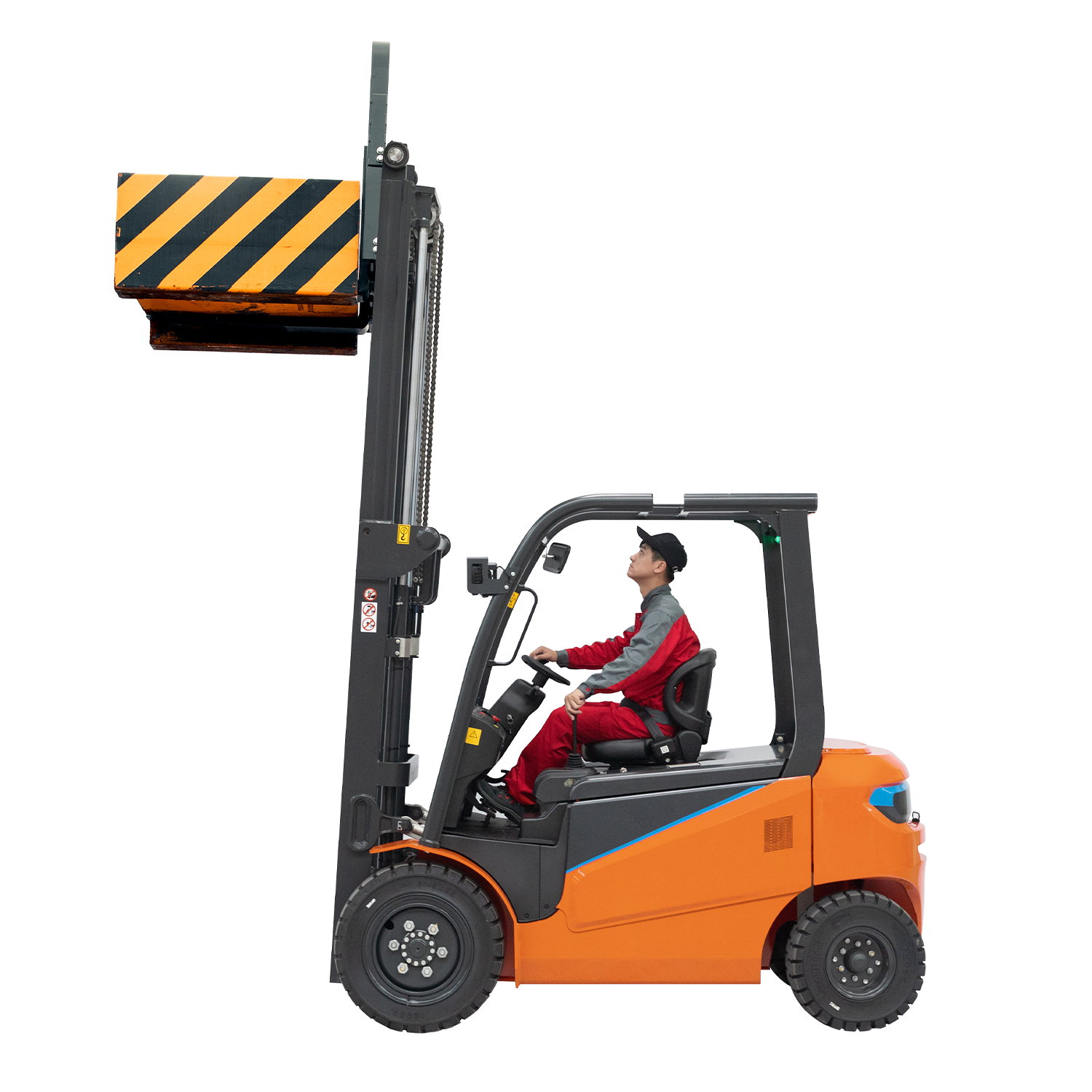
Many operators misunderstand how Electric Forklifts function under heavy industrial strain. They do not just carry a battery for power. The battery acts as a critical structural component. Engineers deliberately design the massive battery pack as the primary counterweight. It anchors the machine securely to the floor. It keeps the center of gravity incredibly low. This exact placement ensures superior stability during high-capacity lifts. Operators can confidently raise heavy pallets to upper racking tiers.
Historically, material handling equipment relied on direct current (DC) motors. Now, the industry heavily favors alternating current (AC) drive motors. AC systems fundamentally change equipment capabilities. They provide much longer run times per charge cycle. They deliver exceptionally fine speed control. Operators navigate tight spaces with precise movements. AC motors also require far fewer moving parts. They eliminate brushes and commutators entirely. This dramatically reduces mechanical wear over time.
Regenerative braking systems represent another massive technological leap. Traditional brakes lose energy as heat. Regenerative systems capture this kinetic energy during deceleration. The electrical system feeds this captured power directly back into the battery. This creates a highly responsive "one-pedal" driving experience. It improves operator response times drastically. It also extends brake pad life for years.
Finally, many buyers harbor a completely outdated myth. They mistakenly believe these machines belong strictly indoors. Modern units feature fully sealed electronics. Manufacturers meticulously weatherproof all internal electrical components. You can confidently deploy heavy-duty models in outdoor yards. They handle rain, snow, and harsh environments effectively.
Understanding distinct equipment classifications helps you select the perfect tool. The industrial truck market segments machinery by specific applications.
Class 1 encompasses electric counterbalance trucks. These represent your traditional sit-down forklift models. You can select nimble 3-wheel designs. These provide ultra-tight turning radiuses for congested dock areas. Alternatively, you can deploy 4-wheel configurations. These heavier models utilize aggressive pneumatic tires. They easily handle uneven outdoor terrain. They dominate outdoor lumber yards previously controlled by internal combustion trucks.
Class 2 encompasses electric motor narrow aisle trucks. Manufacturers engineer these explicitly for high-density storage facilities.
Reach Trucks: These utilize advanced pantograph mechanisms. Operators extend the forks deeply into the racking structure. They easily access single or double-deep racking setups.
Order Pickers: These machines elevate the entire operator platform. The driver rises directly alongside the forks. They are perfect for piece-picking tasks. Facilities mandate wire-guided systems to steer them safely between racks.
Turret Trucks: These feature a specialized rotating 90-degree mast. The operator retrieves pallets from the sides. The vehicle chassis never turns. They excel in very narrow aisles (VNA). They comfortably operate in spaces down to 7 feet wide.
Class 3 covers electric motor hand trucks. These include highly maneuverable walkie pallet jacks. You will also find stand-on tow tractors here. They specialize in rapid horizontal transport. They streamline dock-to-stock workflows flawlessly.
Classification | Equipment Types | Ideal Operational Environment | Minimum Aisle Space |
|---|---|---|---|
Class 1 | 3-Wheel & 4-Wheel Counterbalance | Outdoor yards, loading docks, heavy-duty transport | Approx. 12+ feet |
Class 2 | Reach Trucks, Order Pickers, Turret Trucks | High-density storage, single/double-deep racking | 7 to 10 feet |
Class 3 | Walkie Pallet Jacks, Stand-on Tow Tractors | Horizontal transport, dock-to-stock staging | Variable |
Lead-acid batteries remain the traditional industry standard for many fleets. However, they demand intense manual oversight. They require incredibly strict watering schedules to function. You must perform regular equalization charging weekly. This balances the individual cell voltages. A well-maintained lead-acid unit yields an average lifespan of 2,000 charge cycles. A common mistake is discharging them deeply. Discharging below manufacturer recommendations causes irreversible sulfation. It ruins the battery capacity permanently.
Lithium-ion (Li-ion) technology changes the industrial landscape entirely. Li-ion chemistry offers roughly 30% higher energy efficiency than lead-acid. More importantly, it perfectly supports "opportunity charging." Operators simply plug the machine in during short 15-minute breaks. They plug in during lunch hours. This entirely eliminates the need for physical battery swaps. You can run intense 24/7 multi-shift operations using a single battery pack.
Thin Plate Pure Lead (TPPL) serves as a powerful emerging alternative. It occupies a strategic middle ground. TPPL provides significantly faster charging speeds than standard lead-acid. It also demands far fewer maintenance interventions.
Infrastructure upgrades demand a close evaluation of charger efficiency. Modern facilities increasingly utilize ferroresonant charging technology. This specific technology maximizes electrical power factors. It limits dangerous electrical grid strain during peak charging windows.
Operator safety improves drastically when facilities phase out internal combustion engines. Traditional propane machines feature large, bulky rear LP gas tanks. These tanks create massive visual obstructions. Removing the rear LP gas tank completely opens up the field of vision. Operators experience a clear, unobstructed rearline sight. This structural advantage measurably reduces reversing accidents and collisions.
Operator health benefits substantially from modern electric designs. Manufacturers equip new models with fully suspended, shock-absorbing cabins. Furthermore, near-silent operation eliminates the constant roar of a combustion engine. This silence is not merely a luxury. It significantly reduces chronic operator fatigue. It prevents severe end-of-shift headaches. It actively mitigates long-term occupational hearing loss.
OSHA mandates extremely strict charging station requirements. Traditional lead-acid battery charging demands comprehensive physical infrastructure.
Install dedicated exhaust and ventilation systems. Forced ventilation prevents highly explosive hydrogen gas buildups.
Provide plumbed eyewash stations. Ensure they deliver a continuous 15-minute minimum flush capability. Dedicated safety showers are equally mandatory.
Stock rapid acid neutralization kits nearby. You must use precise baking soda and water ratios. Mechanics must always use non-sparking tools during battery maintenance.
Modernizing your fleet creates tremendous operational advantages. Deploying Electric Forklifts fundamentally transforms how maintenance departments function. The most significant maintenance advantage comes from what is missing. Your mechanics no longer replace fouled spark plugs. You eliminate complicated, failure-prone transmissions entirely. Engine oil changes and leaky cooling systems vanish from your maintenance schedule. This vast reduction in moving parts maximizes your equipment uptime.
Space reclamation provides massive physical ROI. Traditional lead-acid fleets require massive, dedicated battery changing rooms. These rooms consume valuable warehouse real estate. Lithium-ion technology and opportunity charging eliminate these heavy infrastructure demands. You can dismantle your old battery rooms immediately. You reclaim that premium square footage for lucrative, revenue-generating storage.
Modern industrial equipment effectively acts as mobile IoT devices. Software-defined performance relies heavily on advanced telematics platforms. Fleet managers can easily program specific operating characteristics. You can restrict acceleration and top speeds based strictly on driver experience levels.
A highly recommended best practice is utilizing integrated 7-inch touchscreens. Operators must complete automated, digital pre-shift OSHA checklists before the machine starts. Advanced telematics systems provide constant GPS tracking. Real-time impact detection systems instantly notify management of collisions. This software accountability deters reckless driving effectively.
Choosing the appropriate material handling equipment requires a methodical approach. Follow these action-oriented next steps for a flawless deployment:
Conduct a comprehensive facility audit immediately. Measure your absolute minimum aisle widths.
Assess your current electrical grid capacity thoroughly. Map out your exact shift schedules and break times.
Select your ideal forklift class and battery chemistry sequentially. Base this selection entirely on your facility audit data.
Future-proofing your warehouse operations starts with foundational electrification. Modern electric models provide a mandatory digital stepping stone. They serve as the necessary foundation for integrating autonomous guided vehicles (AGVs). They seamlessly interface with sophisticated warehouse automation systems. They ultimately prepare your entire facility for the next generation of robotics.
A: Electric models produce zero indoor emissions. They contain significantly fewer moving parts, which dramatically reduces your maintenance burdens. The near-silent operation also minimizes warehouse noise pollution, reducing chronic operator fatigue.
A: Yes. Heavy-duty Class 1 models feature fully sealed AC drives. Equipped with aggressive pneumatic tires, they safely match diesel performance across rugged outdoor lumber yards or wet shipping docks.
A: It depends heavily on your chosen model. Standard counterbalance trucks require roughly 12 feet. Reach trucks operate smoothly in 8 to 10-foot spaces. Specialized turret trucks easily navigate very narrow aisles down to 7 feet.
A: Opportunity charging means plugging in lithium-ion batteries during brief operator breaks. This strategic practice eliminates the need to physically swap heavy, depleted batteries between shifts, allowing seamless multi-shift operations.