Views: 0 Author: Site Editor Publish Time: 2026-07-03 Origin: Site
Modern warehousing faces unprecedented pressure in 2026. Profit margins continue to shrink steadily across the global supply chain. Daily throughput demands hit all-time highs as consumer expectations rise. Retaining reliable floor labor remains a constant, exhausting challenge for facility directors. Relying entirely on manual equipment causes rapid operator fatigue. These outdated tools drastically slow down material flow across vast spaces. Conversely, deploying full sit-down forklifts demands massive capital investments. Forklifts also require highly specialized safety training and wide operating aisles. An electric pallet jack effectively bridges this frustrating equipment gap. Upgrading your material handling fleet requires careful consideration today. You must strictly balance upfront capital against long-term operational returns. We designed this guide to provide a transparent, evidence-based framework. Operations managers and procurement teams will discover practical evaluation steps here. You will finally determine if electrifying your material fleet makes clear financial sense.
ROI Timeline: Most high-throughput facilities recoup electric pallet jack investments within 6–12 months through productivity gains and reduced injury claims.
Ideal Application: Best suited for continuous multi-shift operations, transport distances exceeding 50 feet, and load handling over 2,500 lbs.
TCO (Total Cost of Ownership): Lithium-ion adoption has significantly lowered maintenance costs compared to traditional lead-acid batteries.
The Caveat: Low-volume storage facilities or highly corrosive environments may still find manual jacks or specialized equipment more cost-effective.
Facility leaders must justify every equipment purchase rigorously. Understanding electric pallet jack benefits ensures you align capital expenses toward real operational goals. Let us examine how motorized features deliver concrete financial returns across typical warehousing environments.
Motorized pulling fundamentally changes dock-to-stock cycle times. A manual pull averages a sluggish walking pace under heavy loads. Workers naturally slow down significantly as shift hours pass. Physical fatigue sets in quickly during the late afternoon. An electrified model maintains a consistent 3.5 to 4.0 miles per hour travel speed. Acceleration remains sharp regardless of the pallet weight. You move goods from receiving docks to storage racks much faster. Peak volume periods expose the true value of motorized speed. Faster cycles mean fewer bottlenecks on the busy loading dock. Improved daily output metrics directly increase overall facility profitability. High-speed transport keeps your entire logistics chain moving fluidly.
Frontline workers face harsh physical realities on the concrete floor. Continuous manual pulling destroys lower backs and shoulders over time. Workers' compensation claims represent a massive financial leak for logistics companies. Motorization drastically reduces harmful push and pull strain. Operators simply press a thumb button instead of leveraging their entire body weight. This ergonomic shift quickly lowers OSHA recordable incidents. Musculoskeletal injuries plummet when machines handle the heavy lifting. A healthier team stays productive longer throughout the week. You spend less time interviewing and training replacement staff. Protecting your workers translates into predictable, stable daily operations.
Standard forklifts demand massive turning radiuses to operate safely. They waste valuable floor space in tightly packed facilities. Motorized jacks offer exceptional maneuverability in narrow aisles. They navigate crowded staging areas effortlessly without damaging racking. Operators easily drive them inside cramped delivery trailers during loading. Better space utilization translates directly to higher storage density. You can pack more inventory into your existing square footage. Shrinking your aisle width requirements delays the need for expensive facility expansions. Compact equipment maximizes every inch of your costly real estate.
Procurement teams often fixate heavily on initial purchase prices. Evaluating electric pallet jack cost requires looking far beyond the dealer invoice. You must model long-term efficiency and routine upkeep carefully.
Upfront prices vary significantly based on equipment tiers. Semi-electric units feature manual pumps but motorized drive wheels. They offer a highly affordable entry point for smaller operational budgets. Standard fully motorized walkie jacks demand a higher initial investment. Rider models cost even more due to larger, heavier chassis designs. You must align your CapEx budget to actual throughput needs. Overbuying equipment wastes capital that you could deploy elsewhere. Underbuying equipment leads to premature machine failure and costly replacements.
Battery selection heavily dictates your long-term operational expenses. Traditional lead-acid batteries require strict, weekly watering schedules. They also need dedicated, ventilated charging stations to operate safely. This infrastructure consumes valuable facility footprint and requires specialized training. Conversely, lithium-ion power alters the maintenance landscape completely. These modern batteries support rapid opportunity charging safely. Operators plug them in during brief lunch breaks to extend runtimes. Lithium-ion batteries last much longer and require zero water maintenance. You save thousands on labor previously dedicated to tedious battery care.
Calculating return on investment involves a straightforward labor efficiency formula. Track the daily time saved per operator using motorized equipment. Multiply those saved hours by your fully burdened hourly labor rate. Hidden savings also exist in reduced equipment downtime. Reliable motorized units keep your workforce moving constantly. Maintenance delays disappear when you upgrade to modern electric fleets.
Daily ROI Calculation Table
Metric | Manual Jack | Motorized Jack | Net Difference |
|---|---|---|---|
Average Move Time (100 ft) | 90 seconds | 45 seconds | 45 seconds saved |
Moves Per Shift | 150 moves | 150 moves | - |
Total Travel Time | 3.75 hours | 1.87 hours | 1.88 hours saved |
Labor Cost ($25/hr) | $93.75 | $46.75 | $47.00 saved daily |
Certain logistics environments ruthlessly expose the physical limits of manual equipment. In these intense facilities, a warehouse electric pallet jack transforms from a luxury into an absolute necessity. Let us explore these critical high-yield scenarios.
Cross-docking operations thrive on absolute material velocity. Inbound goods must transition to outbound trailers immediately. Fast-paced loading docks require constant trailer entry and exit. Manual pulling creates unacceptable bottlenecks in these high-traffic zones. Motorized units allow workers to clear docks rapidly. They navigate steep dock plates without requiring intense physical momentum. High-volume environments depend entirely on this continuous, unbroken material flow.
Facility layouts heavily dictate your ideal equipment choices. Many modern distribution centers span hundreds of thousands of square feet. Staging areas often sit far away from receiving docks. Manual operation becomes exhausting when transport distances exceed 50 feet. Motorized solutions glide across long stretches effortlessly. They preserve worker energy for critical, detail-oriented sorting tasks. Long-haul transport demands powered drive wheels to maintain efficiency.
Weight directly dictates the physical toll on your workforce. Consistent movement of pallets weighing 2,500 to 4,500 pounds is dangerous. Manual pushing introduces severe musculoskeletal injury risks under these loads. Workers struggle to stop heavy manual loads safely once moving. Motorized electromagnetic braking systems handle heavy-duty load profiles securely. They prevent runaway pallets and subsequent facility damage. You maintain complete control over massive loads.
Round-the-clock facilities demand extremely high equipment availability. Multi-shift operations benefit immensely from fast-charging lithium batteries. One piece of equipment serves three different operators seamlessly. You avoid buying redundant machines just to cover lengthy charging times. Continuous operations cannot pause for slow-charging legacy batteries. Modern electric fleets support aggressive 24/7 warehouse schedules smoothly.
Objective procurement requires recognizing equipment limitations honestly. Sometimes electrifying your fleet is the wrong operational move entirely. We must examine the manual advantage and the forklift threshold fairly.
Manual equipment still dominates specific operational niches today. They remain perfect for low-frequency, occasional pallet moves. Short transport distances under 50 feet rarely justify motorization. Micro-fulfillment centers often lack the floor space for faster equipment. Tight budgets benefit from manual units because charging infrastructure is unnecessary. Maintenance remains incredibly cheap and highly straightforward. You only need to replace hydraulic fluid and worn wheels occasionally. Retail backrooms typically prefer manual jacks for their simplicity.
Motorized jacks face a hard physical limit: they are floor-bound. When vertical stacking becomes necessary, you cross the forklift threshold. Facilities maximizing vertical cube space require reach trucks or standard forklifts. Pallet jacks also struggle outside the warehouse floor. Heavy outdoor yard applications demand large pneumatic tires. Uneven terrain easily traps small polyurethane jack wheels. They lack the ground clearance for rugged outdoor work. Dirt, gravel, and snow halt pallet jacks instantly.
Upgrading introduces distinct operational friction points. Management must address these adoption risks through clear training.
Initial operator resistance often occurs during early fleet rollouts.
Veterans might complain about new electronic control schemes initially.
Lead-acid fleets require strict watering and charging protocols.
Ignoring maintenance protocols destroys battery life rapidly.
Misjudging aisle widths leads to unexpected operational bottlenecks.
Selecting the right machine requires a systematic evaluation process. Buyers must scrutinize several technical dimensions before signing purchase orders. Use this practical framework to shortlist models effectively.
Follow these distinct steps when evaluating new equipment:
Analyze your heaviest consistent pallet loads carefully.
Inspect the steel thickness on the primary equipment chassis.
Test the tiller arm for ergonomic operator comfort.
Verify local dealer support and spare parts availability.
Never under-spec your equipment just to save money. You must match the nominal capacity rating to your heaviest consistent loads. Pushing a 3,000-pound rated jack to carry 3,500 pounds guarantees premature motor failure. Always build in a 20 percent capacity buffer for absolute safety. This buffer protects the internal hydraulics from unexpected weight surges. Accurate capacity matching ensures maximum equipment longevity.
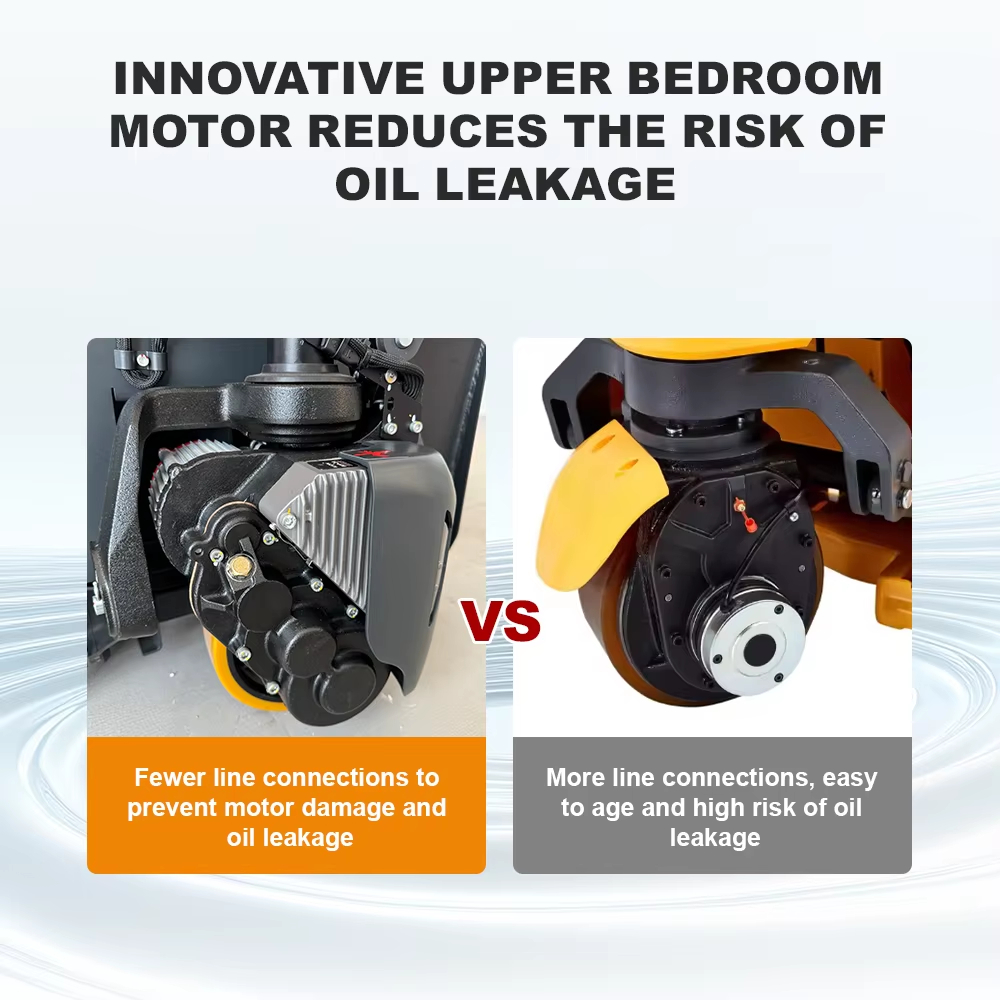
Loading docks serve as brutal testing grounds for equipment. Durability considerations must drive your purchasing decisions entirely. Look for heavy-gauge steel thickness along the primary frame. Reinforced fork tips absorb repeated impacts against wooden pallets. Weak forks bend over time, making pallet entry physically impossible. Inspect the undercarriage for exposed wires or vulnerable hydraulic hoses. Robust chassis designs survive harsh industrial environments.
The tiller arm design dictates daily operator comfort heavily. Modern handles feature intuitive butterfly switches for forward and reverse travel. Anti-pinching belly button switches protect operators from being crushed against walls. Emergency stops must remain highly visible and easily accessible. Test the steering resistance to ensure it feels smooth. Awkward controls cause operator fatigue just as quickly as manual pulling.
Even premium equipment eventually requires routine maintenance. Access to local dealer support prevents catastrophic operational delays. Evaluate the local availability of critical spare parts thoroughly. Many modern units include onboard diagnostic screens. These displays help technicians identify electronic fault codes instantly. Quick diagnostics mean faster repairs and higher fleet uptime. Tool-less cover removal allows mechanics to inspect motors rapidly.
Quick Evaluation Checklist Chart
Evaluation Area | Key Feature to Verify | Ideal Specification |
|---|---|---|
Load Capacity | Maximum lifting weight | Heaviest pallet + 20% buffer |
Drive Motor | Motor technology type | Brushless AC drive motor |
Safety Specs | Braking and emergency stops | Electromagnetic braking, belly switch |
Service Access | Internal component layout | Tool-less cover removal |
Motorizing your material handling fleet is a strategic operational upgrade. It functions as a powerful labor-retention asset in modern distribution centers. Deployed in the correct environment, these units optimize daily throughput significantly. They protect workers from injuries and speed up critical shipping cycles. Operations managers should immediately audit their facility data today. Track your average transport distances meticulously over a typical shift. Survey your frontline workers about end-of-shift physical fatigue frequently. These metrics will clearly dictate your next equipment move.
Are you ready to modernize your floor operations? Request a comprehensive fleet evaluation from an equipment specialist today. Review specific product lines tailored to your exact facility layout. Contact an expert sales team for a custom efficiency calculation designed around your unique labor rates. Upgrading your equipment protects your margins and empowers your workforce.
A: Lithium-ion batteries generally last between 3,000 and 5,000 charge cycles, easily covering five to seven years of heavy use. Traditional lead-acid batteries typically survive 1,500 cycles if maintained perfectly. A single charge on a modern lithium unit easily powers a full eight-hour shift. Opportunity charging during breaks extends this runtime indefinitely for continuous operations.
A: Yes, OSHA requires formal instruction and practical evaluation before an operator uses motorized jacks. However, this certification process is much less intensive than full sit-down forklift training. Employers must conduct hands-on testing specific to the exact equipment model. Regular refresher courses ensure operators maintain safe driving habits over time.
A: Most standard units are designed strictly for indoor, dry warehouse floors. Using them outdoors exposes sensitive electronics to water damage. Cold storage environments require specialized conditioning packages. Freezer-rated models feature specific hydraulic fluids and internal heaters to prevent condensation. Always check the machine's IP rating before deploying it in wet or freezing areas.