Views: 0 Author: Site Editor Publish Time: 2026-06-10 Origin: Site
Relying on manual labor for heavy material handling is no longer a viable strategy for growing warehouses. Upgrading to motorized equipment represents an absolute necessity to maintain high throughput and reduce costly workplace injuries. An electric powered pallet jack serves as a critical operational investment for your facility. If you select the wrong unit, you risk creating dock bottlenecks, suffering premature battery failure, and wasting valuable capital.
Facilities require equipment perfectly matched to their specific daily workflows. This guide provides a strictly criteria-based framework to help you evaluate, shortlist, and purchase the right equipment. You will learn how to match specific warehouse constraints against available technologies. We cover everything from facility layouts to battery chemistry to ensure you make an informed, data-backed decision.
ROI hinges on utilization: Upgrading to an electric powered pallet jack makes financial sense when throughput demands exceed manual physical limits or operator fatigue causes measurable slowdowns.
Battery chemistry dictates workflow: The choice between Lithium-ion and Lead-Acid directly impacts charging infrastructure, maintenance schedules, and multi-shift viability.
Facility constraints are the ultimate filter: Aisle width, ramp inclines, floor grading, and dock plate transitions must dictate equipment specifications before looking at brand or price.
TCO > Upfront Price: Long-term value relies on parts availability, serviceability, and warranty terms rather than the initial sticker price.
Moving heavy pallets manually drains worker energy rapidly. This operator fatigue directly translates into slower transit times during the second half of a shift. It also skyrockets the risk of severe musculoskeletal injuries. Strained lower backs and shoulder injuries cause massive operational downtime. When you switch to a motorized unit, you immediately eliminate these physical hurdles. You empower your workforce to move heavier loads with minimal physical exertion.
But when exactly is the right time to make this switch? You need to measure your throughput benchmarks carefully. If your operators consistently move more than 20 pallets per shift, motorized assistance becomes economically necessary. Likewise, examine your typical travel paths. If workers push heavy loads over distances exceeding 100 feet, manual jacks waste valuable time. They force workers into slow, exhausting walking paces.
You can justify this equipment investment easily. Compare the high costs of manual labor inefficiencies against the new equipment's price. Factor in the severe workers' compensation risks associated with manual pulling. The upfront costs of an electric powered pallet jack pale in comparison to injury payouts and lost warehouse productivity. Always look at the productivity gains you unlock by moving goods faster across the dock.
Load capacity requires realistic sizing. You must analyze your heaviest routine loads before looking at equipment catalogs. Never buy a machine rated exactly for your maximum average pallet weight. We strongly recommend building in a 10 to 20 percent capacity buffer. This extra capacity prevents premature drive motor strain. It also accounts for necessary derating when navigating steep inclines. If your typical load weighs 4,000 pounds, a 4,500-pound rated unit provides a much safer operating margin.
Next, evaluate your battery technology. Your facility's charging infrastructure dictates this choice. You primarily choose between Lithium-Ion and traditional Lead-Acid models.
Feature | Lithium-Ion Technology | AGM / Lead-Acid Technology |
|---|---|---|
Upfront Cost | Higher initial investment | Lower initial investment |
Maintenance Needs | Zero maintenance required | Requires regular watering and equalizing |
Charging Style | Opportunity charging allowed (plug in during breaks) | Requires full charge/cool-down cycles |
Shift Suitability | Ideal for high-intensity, multi-shift operations | Ideal for single-shift or lighter-duty cycles |
Lithium-ion batteries carry a higher upfront price tag. However, they require zero maintenance. They allow for opportunity charging during brief coffee breaks. This flexibility makes them perfect for intense multi-shift operations. Conversely, AGM or Lead-Acid batteries cost less initially. They do require regular watering and strict maintenance schedules. They fit perfectly into single-shift applications where they can charge overnight.
Finally, verify your fork dimensions. Standard operations typically use 27-inch by 48-inch forks. These dimensions fit standard GMA wooden pallets perfectly. If you handle specialized beverage skids or narrow half-pallets, you need custom fork profiles. Ensure complete pallet compatibility before finalizing any purchase. A mismatched fork length leads to unstable loads and severe safety hazards.
Your warehouse layout serves as the ultimate filter. Spatial limits dictate which machines can actually function inside your facility. You must calculate turning radius specifications carefully. Check right-angle stacking requirements against your existing aisle widths. A machine might boast incredible power, but it becomes useless if it cannot physically turn in your aisles.
Floor conditions also play a massive role in equipment selection. Uneven concrete floors and steep dock leveler transitions drastically affect ground clearance. If you have severe ramp inclines, they demand much stronger drive motors. Navigating warehouse debris or uneven dock plates requires specialized engineering. Always specify dual load wheels if your facility features rough flooring. They distribute weight better and roll much more smoothly over physical obstacles.
Account for specialized environmental requirements early in the buying process. Ignoring these specific conditions destroys equipment rapidly.
Cold Storage Environments: Freezers cause rapid condensation. This moisture drains standard batteries quickly. You need units specifically sealed against extreme cold.
Washdown Zones: Food processing environments demand strict IP ratings. These ratings protect sensitive electrical components from high-pressure water damage and harsh cleaning chemicals.
Hazardous Locations: If you operate around flammable gases or combustible dust, standard units pose an ignition risk. You must source equipment carrying proper EE or EX ratings for strict safety compliance.
Safety must remain your absolute top priority. You must demand essential safety features on every unit you purchase. Look for an emergency "belly button" reversing switch on the handle. This critical feature automatically reverses the machine if it pins the operator against a wall. You also need heavy-duty anti-roll-back brakes. These hold heavy loads securely on steep inclines. Variable speed controls give operators precise maneuvering ability around fragile racking.
Ergonomics directly impact daily productivity. An operator handles this equipment for an entire eight-hour shift. The tiller arm design must encourage a natural, strain-free posture. Dual-hand controls allow both left- and right-handed users to work comfortably without awkward reaching. Excellent vibration dampening reduces hand-arm fatigue when rolling over rough concrete dock plates.
Do not ignore operator compliance. Under OSHA regulation 1910.178, these units classify as powered industrial trucks (PITs). You cannot simply hand over the keys to a new hire. OSHA requires formal operator training and specific workplace certification. Ensure you build a thorough training program before the equipment arrives on site.
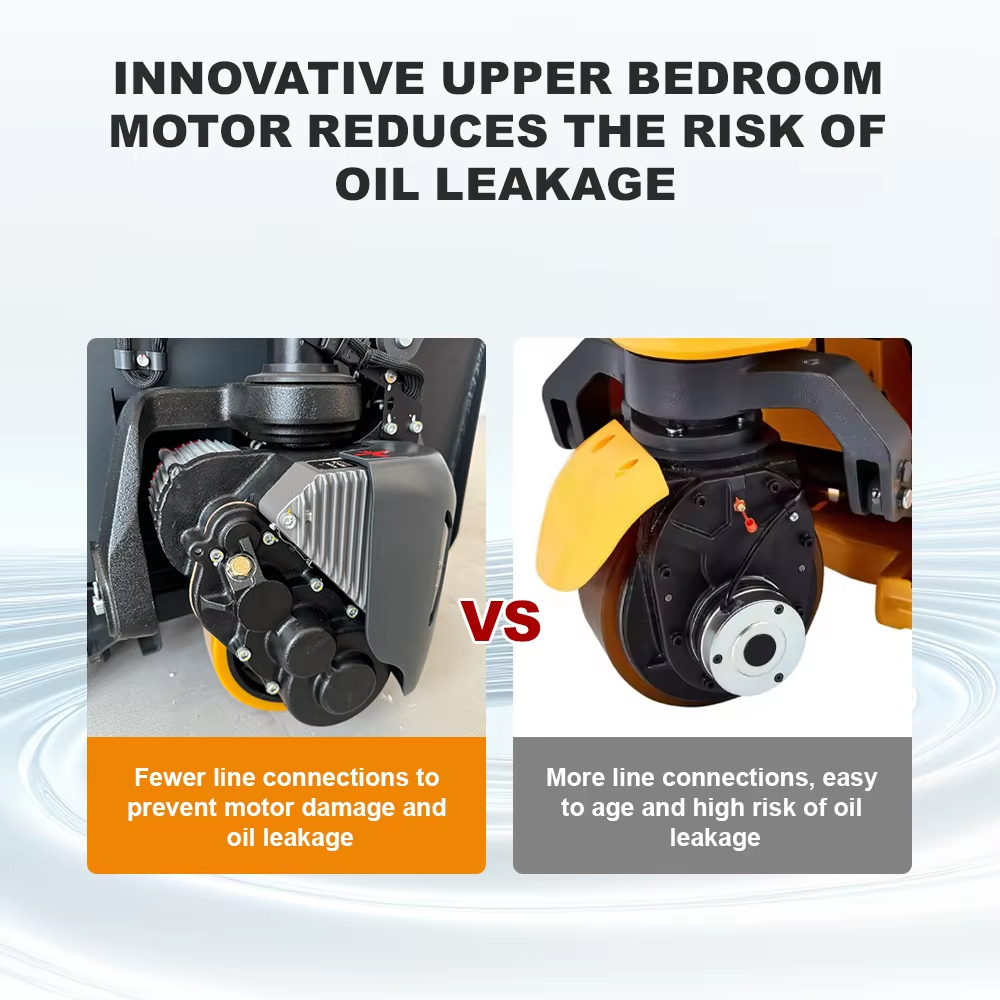
Your procurement strategy must look past the initial invoice. Long-term reliability depends heavily on robust vendor support. First, evaluate the equipment's overall serviceability. Your technicians must access core components easily. Check the placement of drive motors and electrical controllers. They should not require expensive, proprietary diagnostic tools for basic troubleshooting.
Next, scrutinize parts availability and the local dealer network. Avoid budget "white-label" imports. They often lack a reliable local service footprint. If a minor steering sensor breaks, you might wait weeks for international shipping. This extended downtime destroys your daily productivity. Always prioritize brands backed by robust local parts inventories.
Finally, break down the fine print of the equipment warranty. Never accept a blanket timeframe at face value. Warranties differ vastly across various components. Differentiate the exact coverage terms for the main chassis, the drive motor, the controller, and the battery pack. A strong, transparent warranty proves the manufacturer actually trusts their own engineering.
Before you request formal quotes, gather your internal operational data. Use this rapid-fire evaluation checklist to build your facility profile:
Document your absolute maximum and daily average pallet weights.
Measure the longest continuous travel distance operators walk per shift.
Calculate your total daily operational hours and planned shift count.
Measure your absolute narrowest aisle widths and tightest intersecting corners.
Once you gather this operational data, request live demonstrations. Ask the vendor to bring a demo unit directly to your site. Test it on your actual warehouse ramps. Let your primary operators test its maneuverability. Their hands-on feedback often reveals subtle design flaws you might miss on a spec sheet.
Finally, vet your potential vendors aggressively. Ask them to provide reference accounts from businesses with similar facility profiles. Demand clear Service Level Agreements (SLAs) in writing. You need guaranteed response times for unexpected maintenance emergencies. A fast response time prevents minor breakdowns from snowballing into missed shipping deadlines.
Buying an electric powered pallet jack remains a highly localized decision. You must base your final choice on your exact facility layout, daily load profiles, and operational shift strategy. Remember to prioritize functional specifications over brand prestige.
Never overbuy load capacity you simply do not need. Conversely, never underbuy on battery technology or dealer support just to save a few dollars upfront. Assess your floors, measure your aisles, and map out your charging infrastructure first.
Take action today to modernize your material handling processes. Download a comprehensive spec-matching checklist to align your operational needs. Contact a reputable equipment sales team for a thorough on-site facility audit. Request a customized quote to see exactly how this vital machinery fits into your operational strategy.
A: Yes. Under OSHA regulation 1910.178, these machines classify as powered industrial trucks (PITs). Operators cannot legally use them without formal, equipment-specific training and active certification provided directly by the employer.
A: Lifespan varies heavily based on shift hours, maintenance consistency, and operating environments. However, a high-quality unit typically lasts 5 to 7 years under heavy, daily warehouse use.
A: Yes, they navigate inclines efficiently. However, you must respect strict gradeability limits. Climbing steep inclines drastically reduces effective battery life and forces you to derate the safe load capacity.
A: Yes, it is highly worthwhile for busy 2-3 shift operations or facilities lacking proper ventilation for lead-acid charging. It is generally not cost-effective for light, intermittent, single-shift use.